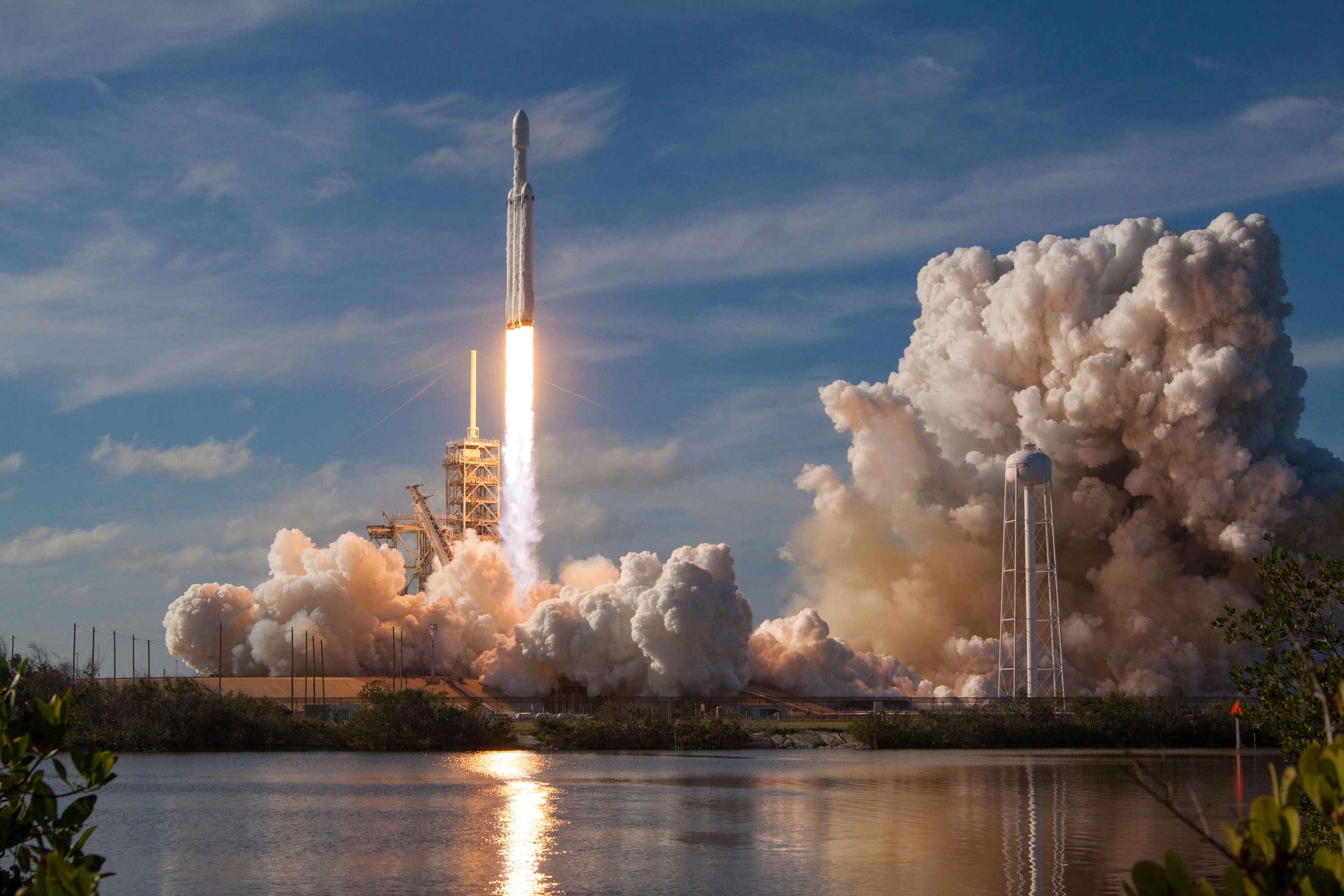
The United States space sector has undergone substantial transformation over the past two decades. What was once an industry dominated by government agencies and a small number of defense contractors has evolved into a diverse ecosystem comprising federal programs, commercial ventures, international partnerships, and emerging technology firms. This evolution reflects changes in policy priorities, technological capabilities, and economic incentives that have reshaped how America approaches space activity.
The Traditional Model: Government-Led Space Operations
For much of the latter half of the 20th century, American space activity operated under a centralized model. NASA, established in 1958, served as the primary civilian space agency, conducting human spaceflight missions, scientific exploration, and technology development. The Department of Defense managed national security space systems, including reconnaissance satellites and communications infrastructure. A limited number of aerospace contractors—primarily large defense firms—built spacecraft, launch vehicles, and supporting hardware under cost-plus government contracts.
This model produced significant achievements, including the Apollo lunar landings, the Space Shuttle program, and the development of interplanetary spacecraft. However, it also faced persistent challenges related to costs, schedule delays, and limited flight frequency. By the early 2000s, policymakers and industry stakeholders began exploring alternative approaches that could reduce expenses and expand participation in space activities.
Policy Shifts and Commercial Space Emergence
The transition toward greater commercial involvement gained momentum through several policy initiatives. The Commercial Orbital Transportation Services (COTS) program, initiated by NASA in 2006, represented a departure from traditional procurement methods. Rather than specifying detailed design requirements, NASA provided funding to private companies to develop cargo delivery services to the International Space Station. This approach allowed firms to retain intellectual property rights and pursue additional commercial customers, creating incentives for cost reduction and innovation.
The subsequent Commercial Crew Program extended this model to human spaceflight, leading to the development of privately operated crew vehicles. These programs demonstrated that commercial entities could design, build, and operate spacecraft meeting NASA's safety and performance standards while achieving cost structures substantially lower than traditional government programs.
Regulatory Framework Adaptation
As commercial space activity expanded, regulatory frameworks evolved to accommodate new types of operations. The Federal Aviation Administration's Office of Commercial Space Transportation (FAA/AST) gained increased responsibilities for licensing launches and reentries. The FCC continued overseeing spectrum allocation for satellite communications. Congress passed legislation addressing topics such as space resource rights and streamlining launch licensing processes, attempting to balance safety oversight with industry growth objectives.
Current Space Sector Structure
Today's U.S. space sector comprises multiple interconnected components. NASA continues operating scientific missions, developing exploration technologies, and managing the International Space Station partnership. The Department of Defense and intelligence community maintain extensive satellite constellations for communications, navigation, surveillance, and missile warning. The newly established U.S. Space Force, formed in 2019, consolidated military space functions under unified command.
The commercial sector has expanded significantly. Launch service providers offer regular access to orbit at prices that have declined markedly over the past decade. Satellite operators provide Earth observation data, communications services, and positioning information to government and commercial customers. Emerging segments include in-space manufacturing, orbital debris removal services, and lunar payload delivery.
International Dimensions
International cooperation remains an important element of U.S. space activity. The International Space Station involves partnerships with Canada, Europe, Japan, and Russia. NASA maintains bilateral agreements with numerous countries for scientific missions and data sharing. At the same time, competition for technological leadership and commercial market share—particularly with China's expanding space capabilities—influences policy discussions about maintaining American competitiveness.
Technology Trends Driving Change
Several technological developments have enabled the sector's transformation. Reusable launch vehicles have reduced the cost of orbital access by recovering and refurbishing rocket stages rather than discarding them after single use. Miniaturization of electronics has made small satellites viable for applications previously requiring large platforms. Advanced manufacturing techniques, including additive manufacturing, are altering how spacecraft components are produced.
Software-defined systems allow satellites to adapt their functions after deployment through programming updates rather than hardware modifications. Electric propulsion provides fuel-efficient alternatives to chemical thrusters for certain mission profiles. These and other advances have lowered barriers to entry for new participants and enabled business models not feasible under earlier technical constraints.
Economic and Strategic Considerations
The economic dimensions of space activity have gained increased attention. Venture capital investment in space companies has grown substantially, funding startups pursuing various commercial applications. Public equity markets have provided capital through traditional IPOs and special purpose acquisition companies (SPACs). Government space budgets remain significant, with NASA receiving approximately $25 billion annually and Department of Defense space programs accounting for additional tens of billions.
Strategic considerations influence policy decisions regarding the sector's direction. Policymakers assess how to maintain technological leadership, ensure access to space-based capabilities essential for national security and economic activity, and establish governance frameworks for emerging space activities such as resource extraction and satellite constellation management.
Looking Forward
The U.S. space sector continues evolving as technology advances, business models mature, and policy frameworks adapt. Current trends suggest ongoing diversification of participants and activities. NASA's Artemis program aims to establish sustained lunar presence involving both government and commercial partners. Commercial satellite constellations are expanding communications coverage and Earth observation capabilities. New entrants pursue applications ranging from space-based solar power concepts to orbital manufacturing facilities.
Challenges persist, including questions about orbital debris management, spectrum allocation conflicts, export control policies affecting international commerce, and competition for limited government budgets. How these issues are addressed will influence the sector's trajectory in coming years. The transformation from a government-dominated domain to a complex public-private ecosystem represents a fundamental shift in how America conducts space activity—one whose full implications are still unfolding.
About This Analysis: This article examines documented developments in the U.S. space sector based on government reports, industry publications, and academic research. The US Space Industry Review provides analytical coverage of America's space ecosystem for professional audiences.