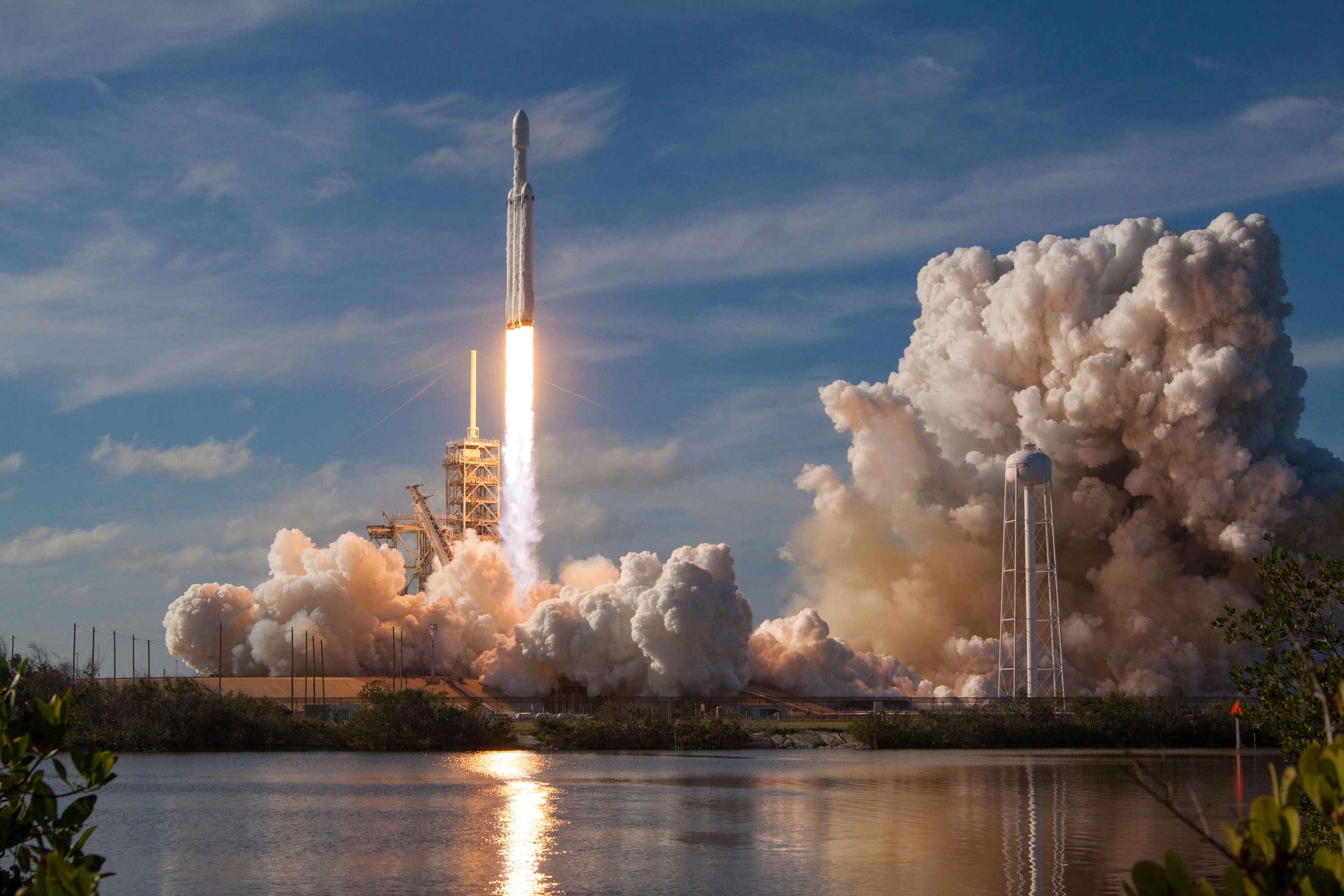
The expansion of commercial space activity has generated sustained policy discussions about appropriate regulatory frameworks. As the number of participants increases, mission types diversify, and new business models emerge, policymakers face questions about how to ensure safety, protect national interests, promote competitiveness, and manage shared resources such as orbital space and radio spectrum. The regulatory environment continues evolving as agencies, Congress, and industry stakeholders work to balance competing objectives.
Launch Licensing and Oversight
The Federal Aviation Administration's Office of Commercial Space Transportation (FAA/AST) holds primary responsibility for licensing commercial launches and reentries in the United States. The agency reviews launch vehicle designs, operational procedures, and safety analyses to ensure operations meet regulatory standards protecting public safety and property. Licensing processes evaluate potential risks to people and property on the ground, aircraft in flight, and other space operations.
As launch rates have increased, attention has focused on streamlining licensing processes while maintaining safety standards. The FAA has implemented programmatic approaches allowing proven launch vehicles with established track records to operate under less burdensome review processes. However, new vehicle designs still require comprehensive evaluation. Debates continue regarding appropriate levels of government oversight versus industry self-regulation, particularly as commercial human spaceflight becomes more routine.
Remote Sensing and Data Regulation
The National Oceanic and Atmospheric Administration (NOAA) licenses private remote sensing satellite systems under authority delegated from the Department of Commerce. Licensing reviews consider whether proposed systems meet requirements related to national security, international obligations, and foreign policy interests. Operators must implement measures preventing unauthorized access to imagery data that could compromise sensitive information.
The proliferation of Earth observation satellites—particularly high-resolution commercial imaging systems—has raised questions about balancing commercial opportunities with security concerns. Policy discussions examine whether existing frameworks remain appropriate as imagery resolution improves, revisit rates increase, and new analysis techniques enable insights not previously feasible. International competitors offering similar capabilities complicate U.S. policy decisions, as overly restrictive regulations could disadvantage American companies without preventing information availability through foreign sources.
Spectrum Management
Radio frequency spectrum represents a finite resource essential for satellite communications, tracking, and control. The Federal Communications Commission (FCC) allocates spectrum for commercial space systems, coordinating with international bodies to minimize interference between systems operated by different nations. The National Telecommunications and Information Administration (NTIA) manages spectrum for government users.
Large satellite constellations requiring thousands of frequency assignments have stressed existing coordination processes. The FCC has modified rules to accelerate licensing while maintaining interference protection. However, concerns persist about spectrum congestion, particularly in popular frequency bands. International coordination through forums such as the International Telecommunication Union remains essential but faces challenges as national interests sometimes conflict with efficient global spectrum allocation.
Orbital Debris and Space Traffic Management
The growing population of objects in Earth orbit has elevated debris mitigation and space traffic management as policy priorities. Current guidelines call for satellites to deorbit or move to disposal orbits within 25 years of mission completion. However, these guidelines lack enforcement mechanisms, and compliance varies. As satellite constellations proliferate, cumulative collision risks increase, raising concerns about self-sustaining debris cascades that could render certain orbital regions unusable.
The Department of Commerce has assumed responsibility for civilian space traffic management functions, working to develop systems for tracking orbital objects and providing collision warnings. Policy discussions address questions including: Should orbital debris mitigation requirements be strengthened? What enforcement mechanisms are appropriate for non-compliant operators? How should orbital capacity be allocated among users? Should active debris removal be required or incentivized? These questions involve technical, legal, and diplomatic dimensions requiring coordination among government agencies, industry, and international partners.
Export Controls and International Competition
Export control regulations govern the transfer of space technology and services to foreign entities. These controls aim to prevent adversaries from accessing capabilities that could threaten U.S. national security. However, they also affect American companies' ability to compete in international markets. Satellites and launch vehicles often contain components subject to International Traffic in Arms Regulations (ITAR) or Export Administration Regulations (EAR), limiting which customers can be served and complicating international partnerships.
Policy debates examine how to protect sensitive technologies while enabling commercial competitiveness. Some argue that overly broad restrictions disadvantage U.S. companies relative to foreign competitors not subject to equivalent controls, potentially causing loss of market share and technological leadership. Others emphasize that certain capabilities must be protected regardless of commercial consequences. Finding appropriate balance points remains an ongoing policy challenge as technology evolves and geopolitical contexts shift.
Property Rights and Resource Utilization
The Outer Space Treaty of 1967 establishes that celestial bodies are not subject to national appropriation. However, questions about property rights for extracted space resources—such as lunar minerals or asteroid materials—remain legally ambiguous. The Commercial Space Launch Competitiveness Act of 2015 asserted that U.S. entities may possess, own, transport, and sell space resources they obtain. This position has generated international debate about consistency with treaty obligations.
As plans for lunar mining and asteroid resource extraction advance, clearer legal frameworks will likely be necessary. Policy discussions consider whether current law provides adequate clarity for commercial investment, how to ensure activities comply with international obligations, and whether multilateral agreements are needed to establish property rights regimes. These questions have no simple answers, involving interpretations of decades-old treaties written for different technological and commercial contexts.
Environmental Considerations
Environmental impacts of space activities have received increasing attention. Launch operations produce emissions and potential effects on atmospheric chemistry. Spent rocket stages and satellites that reenter the atmosphere create debris and chemical byproducts. Large satellite constellations may interfere with astronomical observations due to reflected sunlight and radio frequency emissions. Marine environments may be affected by stage recoveries and offshore launch operations.
Current environmental regulatory frameworks—designed primarily for terrestrial activities—do not comprehensively address space operations. The National Environmental Policy Act requires federal agencies to assess environmental impacts of their actions, including launch licensing, but its application to commercial space activities remains limited. Policy discussions examine whether dedicated environmental regulations for space operations are warranted and how to balance environmental protection with industry growth objectives.
Congressional Oversight and Legislation
Congress exercises oversight of space policy through authorization and appropriation processes, committee hearings, and legislation addressing specific issues. Recent legislative actions have addressed topics including streamlining launch licensing, clarifying authority for space traffic management, establishing Space Force as a separate military service, and funding NASA programs. Proposed legislation has covered areas such as orbital debris mitigation requirements and updates to remote sensing regulations.
Congressional attention reflects both the strategic importance of space capabilities and constituency interests related to space industry jobs and facilities. Competing priorities must be balanced: ensuring national security, promoting commercial competitiveness, maintaining scientific leadership, protecting environmental and public safety, and managing budgetary constraints. Different committees have jurisdiction over various aspects of space policy, sometimes producing coordination challenges as issues span multiple areas of responsibility.
International Frameworks and Cooperation
Space activities occur within international legal frameworks established by treaties including the Outer Space Treaty, Rescue Agreement, Liability Convention, and Registration Convention. These agreements establish principles such as peaceful use of space, international liability for damage caused by space objects, and requirements for registering satellites. However, they were negotiated in an era when only governments operated in space and many current issues were not anticipated.
U.S. space policy involves bilateral and multilateral cooperation on civil space programs, particularly through NASA partnerships with international space agencies. The Artemis Accords represent a recent initiative establishing principles for lunar exploration cooperation. Simultaneously, geopolitical competition—particularly with China—influences policy decisions about technology protection, international partnerships, and strategic investments. Balancing cooperation and competition remains an ongoing challenge in U.S. space policy.
Looking Ahead
Space policy and regulation continue evolving to address emerging challenges. Key areas requiring ongoing attention include: developing effective space traffic management systems as orbital congestion increases; updating export controls to reflect technological realities and competitive dynamics; establishing clearer frameworks for resource rights and commercial activities beyond Earth orbit; implementing environmental protections appropriate for space operations; and ensuring regulatory processes enable innovation while protecting public interests.
Achieving policy objectives will require coordination among multiple government agencies, engagement with industry stakeholders, and international cooperation where activities affect shared interests. The pace of technological change and commercial growth means regulatory frameworks must adapt while maintaining stability necessary for long-term investment. How these policy questions are resolved will significantly influence the trajectory of American space activity and U.S. competitiveness in the evolving global space economy.
About This Analysis: This article examines regulatory and policy frameworks governing U.S. space activities based on government documents, legal analyses, and policy research. The US Space Industry Review provides analytical coverage of America's space ecosystem for professional audiences.