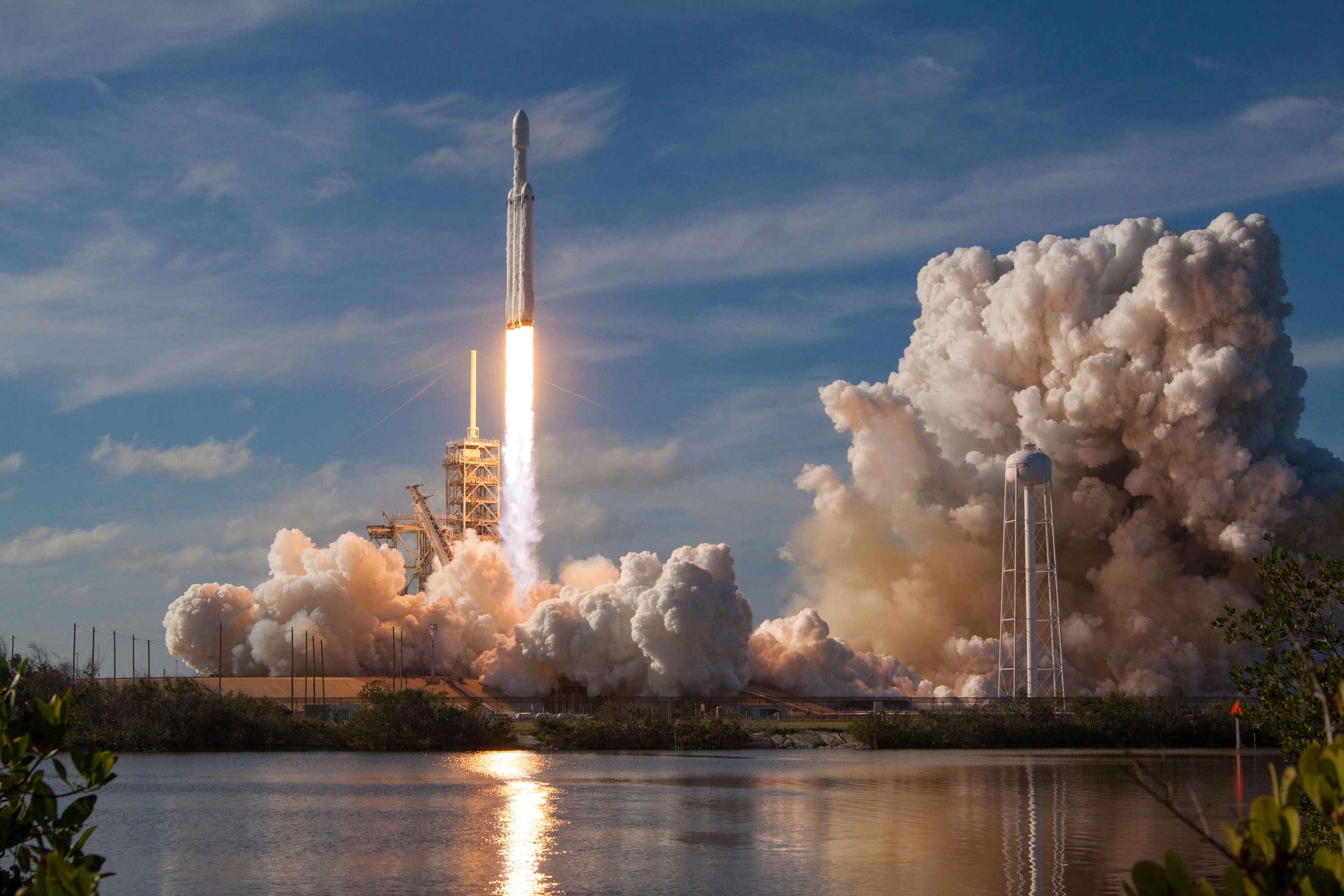
The commercial space launch industry has undergone fundamental transformation over the past fifteen years. Private companies have developed launch systems that have reduced costs, increased operational tempo, and created business models that diverge substantially from traditional government contracting approaches. These changes have expanded access to orbit for both government and commercial customers, influencing satellite deployment strategies, mission planning, and the broader space economy.
The Traditional Launch Market
For decades, access to orbit was provided primarily by government-operated launch systems or vehicles developed by major aerospace contractors under government programs. The United States relied on expendable launch vehicles derived from military missiles and, for a period, the Space Shuttle. Launch costs remained high, typically ranging from tens of thousands to over one hundred thousand dollars per kilogram to low Earth orbit, depending on vehicle type and mission requirements.
Limited launch opportunities constrained satellite operators and scientific missions. Customers often waited years for suitable launch slots and accepted significant schedule uncertainty. The small number of launch providers, high barriers to entry, and reliance on single-use vehicles contributed to sustained cost structures that limited the types of space activities economically viable.
Emergence of Commercial Launch Services
The entry of new commercial launch providers began altering this landscape in the 2000s. Companies approached launch vehicle development with different priorities than traditional programs. Rather than maximizing performance for specific government requirements, these firms emphasized cost reduction, operational efficiency, and serving diverse customer bases. Key innovations included vertical integration of manufacturing, simplified designs reducing part counts, and development of reusable components.
Reusability as a Game Changer
The successful demonstration of orbital-class rocket reusability marked a significant inflection point. By recovering and refurbishing first-stage boosters—which contain the majority of a launch vehicle's hardware value—operators reduced per-launch costs substantially. Initial recovery attempts in the mid-2010s evolved into routine operations, with some boosters flying multiple missions. This approach challenged longstanding assumptions about launch economics and demonstrated that reusability could be practically implemented at commercial scale.
Reusability not only reduced costs but also increased launch cadence. With a fleet of flight-proven boosters, providers could support higher launch rates without proportionally scaling manufacturing capacity. This capability proved particularly valuable for deploying satellite constellations requiring dozens or hundreds of spacecraft.
Impact on Launch Costs and Frequency
Commercial launch services have achieved cost reductions compared to legacy systems. While exact pricing varies by mission profile, payload mass, and contractual terms, industry analyses indicate that costs per kilogram to low Earth orbit have declined by factors ranging from two to ten for certain mission types when comparing current commercial services to traditional expendable vehicles.
Launch frequency has also increased markedly. The United States now conducts over 100 orbital launches annually—more than triple the rate typical in the early 2000s. This growth reflects both increased domestic demand and U.S.-based providers capturing market share from international competitors. Higher launch rates provide customers with greater scheduling flexibility and reduce opportunity costs associated with delays.
Competitive Dynamics
The commercial launch market has become increasingly competitive. Multiple providers now offer services across different payload classes, from small satellites to heavy-lift missions. Competition has driven continued cost reduction, service improvements, and innovation in areas such as launch vehicle recovery, rapid turnaround operations, and customer integration processes.
This competitive environment differs from earlier periods when a small number of established providers faced limited pressure to reduce costs or accelerate operations. Government customers, particularly NASA and the Department of Defense, have adjusted procurement strategies to leverage commercial competition, using mechanisms such as fixed-price contracts and competitive awards to multiple providers.
New Business Models and Market Segments
Commercial launch providers have developed business models extending beyond traditional single-mission contracts. Rideshare services allow multiple small satellites to share launch costs on a single vehicle, reducing barriers for startups, research institutions, and developing nations. Some providers offer regularly scheduled launches to standard orbits, similar to airline operations, allowing customers to book payload slots without chartering entire vehicles.
The emergence of small launch vehicles designed specifically for lightweight payloads represents another market segment. These systems target customers requiring dedicated launches to specific orbits at lower cost points than rideshare opportunities on larger vehicles. While economics of small launchers remain challenging due to limited economies of scale, continued technology development aims to make this segment commercially sustainable.
Government Partnerships
NASA's approach to procuring launch services has influenced commercial provider development. Programs such as Commercial Resupply Services and Commercial Crew have provided anchor customers for new vehicles while allowing companies to retain intellectual property and pursue additional commercial business. The Department of Defense's National Security Space Launch program similarly awards contracts to multiple commercial providers, ensuring access while promoting competition.
These partnerships demonstrate how government customers can accelerate commercial capability development through strategic procurement while potentially reducing long-term costs compared to traditional acquisition approaches. The model has generated debate regarding appropriate risk allocation, oversight levels, and balancing mission assurance requirements with commercial operational flexibility.
Technical Capabilities and Limitations
Current commercial launch vehicles span a range of capabilities. Medium-lift vehicles handle payloads of several thousand kilograms to low Earth orbit, suitable for most commercial satellites and many government missions. Heavy-lift vehicles can deliver tens of thousands of kilograms, enabling large satellite constellations, deep-space missions, and eventual human spaceflight beyond low Earth orbit.
However, limitations remain. Achieving very high reliability rates requires extensive flight heritage, and newer vehicles continue building operational track records. Orbital debris concerns are growing as launch rates increase, necessitating improved tracking, collision avoidance, and eventual active debris removal. Regulatory frameworks must evolve to address environmental considerations including launch emissions, marine impacts from stage recoveries, and potential effects on astronomical observations from proliferating satellite constellations.
International Context
U.S. commercial launch providers operate within a global market. European, Russian, Chinese, Indian, and Japanese launch services compete for international customers, though market shares have shifted as U.S. commercial providers have captured business previously served by foreign vehicles. Export control regulations influence which satellites can be launched on U.S. vehicles, affecting market access and pricing dynamics.
International partnerships and competition shape U.S. policy considerations. Maintaining technological leadership and ensuring independent access to space for national security purposes remain priorities. At the same time, some international cooperation in areas like standardized interfaces and coordinated orbital traffic management could benefit all spacefaring nations.
Future Trajectory
The commercial launch sector continues evolving as technology advances and new applications emerge. Full reusability of both booster and upper stages remains an engineering goal that could further reduce costs. Point-to-point Earth transportation using suborbital trajectories has been proposed, though technical, regulatory, and economic viability remains uncertain. Lunar and Mars mission support will require capabilities beyond current commercial vehicles, driving development of next-generation heavy-lift systems.
Market sustainability questions persist. Some companies have achieved profitability, while others continue operating at losses while building market position. Satellite constellation demand has driven much recent growth, but whether this demand sustains long-term remains uncertain. Government contracts provide stable revenue, but dependence on government business affects how "commercial" these markets truly are.
The transformation of launch access represents one of the most significant developments in space industry evolution. By reducing costs and increasing operational tempo, commercial launch providers have enabled space activities not previously feasible. This shift continues reshaping strategic planning for government programs, business cases for satellite operators, and possibilities for scientific research. How this market evolves in coming years will substantially influence the broader trajectory of American and global space activity.
About This Analysis: This article examines documented developments in commercial space launch services based on industry reports, government data, and technical literature. The US Space Industry Review provides analytical coverage of America's space ecosystem for professional audiences.